Using the Tickets dashboard
Turn tasks into tickets, move cards through the workflow, and understand chat tickets.
Turn on Tickets
A workspace Owner can open Settings → Tasks and enable the Tickets dashboard. The Tickets menu appears for Owners and Managers in that workspace. Tickets never link across workspaces.
Turn a task into a ticket
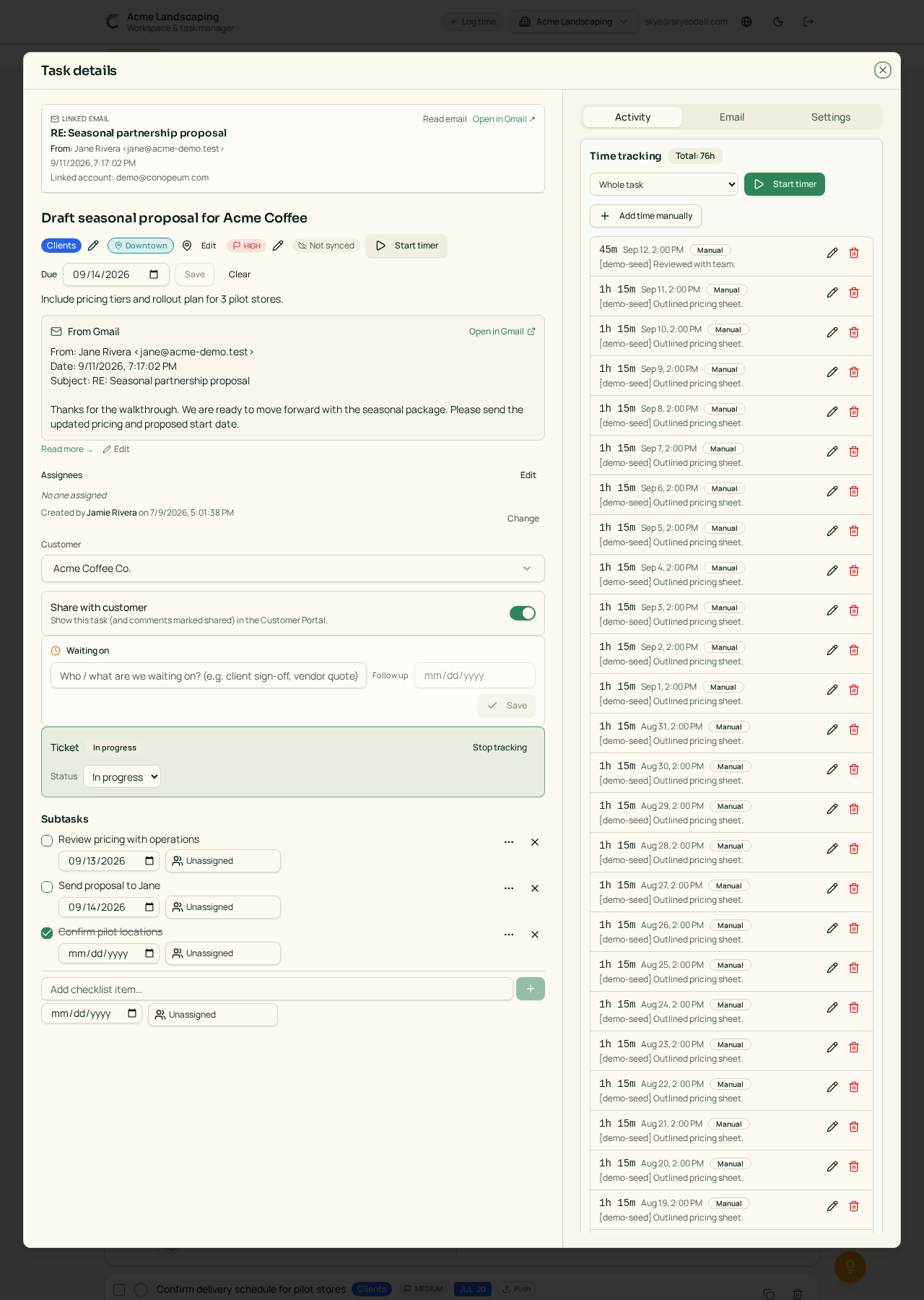
Open the task. In the ticket panel, choose Track as ticket. Owners and Managers can set its status or stop tracking it. Everyone who can view the task can see that it is a ticket and its current status.
A section can also be set to Treat as tickets. This affects new tasks created in that section only. Existing tasks are not converted.
Status workflow
Tickets use these statuses in order:
- New
- Triaged
- In progress
- Blocked
- Resolved
- Closed
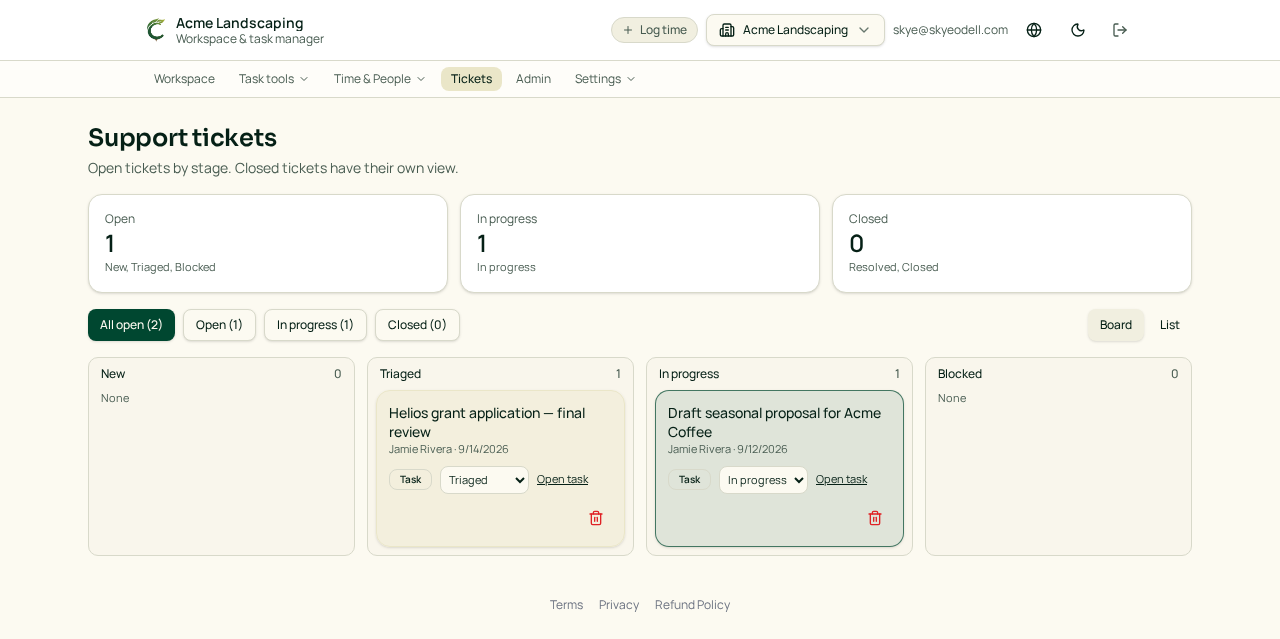
The board uses the same columns as the status picker. Drag a card to another column, or use its status menu on touch devices and with a keyboard. All open excludes Closed. The Closed view contains Resolved and Closed.
Task and ticket status stay together
Completing a ticket task moves it to Resolved unless it is already Closed. Reopening the task moves it to In progress. Setting a ticket to Resolved or Closed completes its task. Ticket tasks use matching status colors in the Tickets board and workspace task list, plus a black status badge before the task title.
Chat tickets and task tickets
A Task ticket opens the full task. A Chat ticket came from the support chat opened in that workspace. Open it to read the requester, sender names, dates, status, and conversation. Support replies appear in that conversation. Empty chats are not listed as tickets.
App administrators can delete a ticket. Deleting a task ticket stops ticket tracking but preserves the task; deleting a chat ticket removes its conversation.